
Years ago when we were running a garden center at full steam, an acquaintance of ours walked into the shop with a shy young teenager in tow and stated "She needs a job!" The mother went on to say that she thought working outdoors with plants was just the right fit for Lei, the still mute girl in bib overalls standing behind her. Lei finally said she thought she would like working with plants and that she went to school right up the road from the garden center.
We agreed to take her on a trial basis a couple days after school and a few hours on weekends, but didn't expect her to last long as, unfortunately, a number of teenagers brought in by their parents rarely lasted more than a week or two. However, Lei not only lasted longer than a few weeks, but worked part time through her entire high school career. She earned a scholarship from one of the local garden clubs, and went on to major in horticulture at Delaware Valley University in Pennsylvania.This shy, awkward teen blossomed (pun intended) into a confident, knowledgeable, young woman now working for a large perennial grower.
I mention Lei since I recently came across an article in the Eastern Edition of Country Folks Growers regarding scholarship money available for floriculture/horticulture students. The deadline is May 1 for 20 separate scholarships offered by the American Floral Endowment (AFE). Look online for a complete description of each AFE scholarship offered, requirements, and an application.
If you know of a young person who could benefit from this information, please pass it along. We like to think we played a small part in Lei achieving her dream and hope by writing about this scholarship, we may be helping some other young person do the same.
A reminder that the Philadelphia International Flower Show is open now through March 13 at the Convention Center with this year's theme being "Springtime in Paris".
Think Spring!
Cheryl
Monday, March 7, 2011


Saturday, February 19, 2011
Two Bluebirds and a Butterfly
After the one-two (3,4,5,6,?) punch winter has given our country this year, all of us are longing for warmer, milder weather. We got a taste of that here this week when the sun came out and temperatures rose into the 60's here at Pittsgrove finally melting away most of the several inches of snow that had accumulated for weeks.
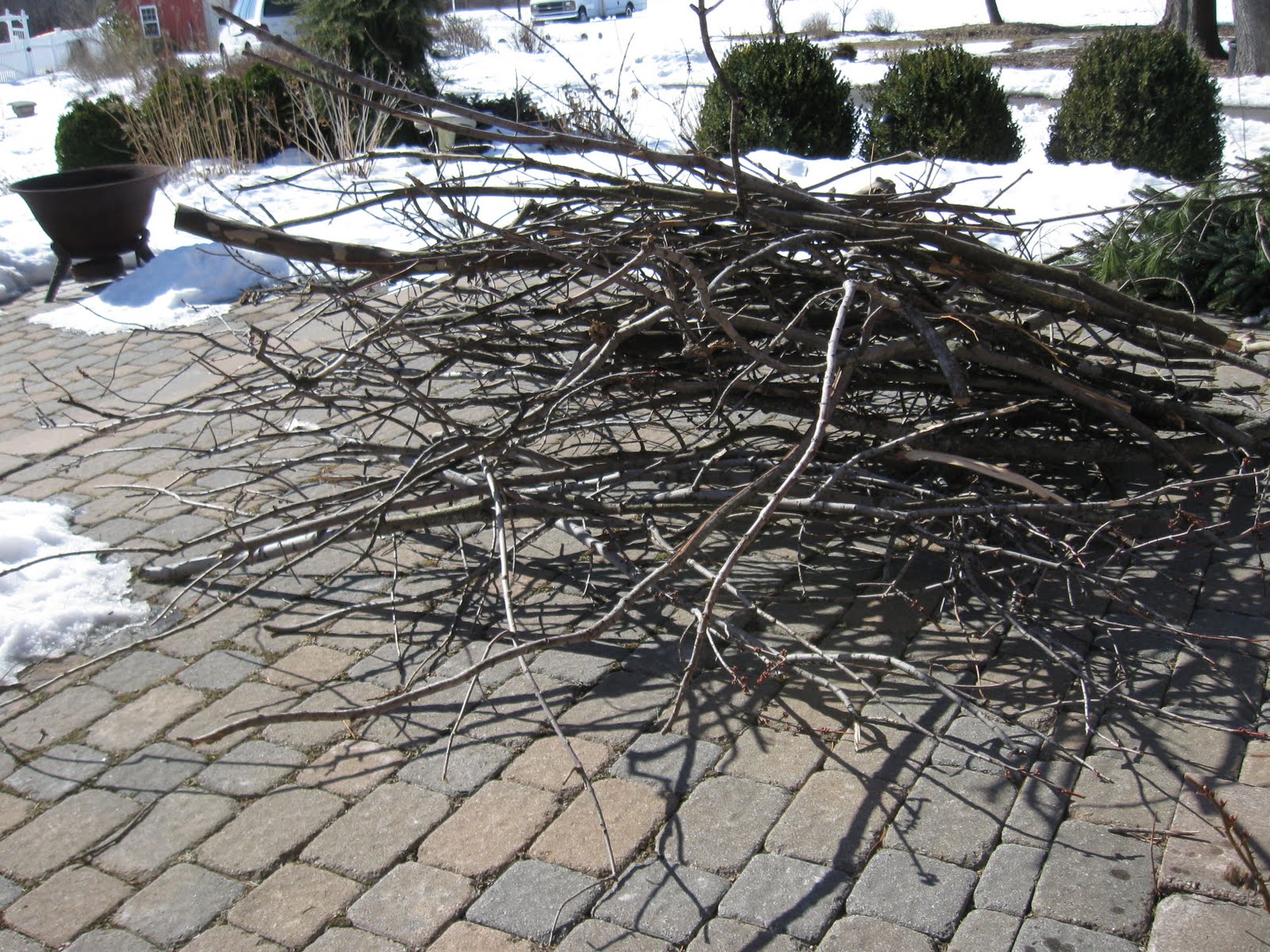
I spent a good part of the day collecting and breaking up the branches that have fallen from some of the extremely windy days that we have been experiencing. I wandered the property to get a guesstimate on how well our beds held up over the winter. Snow cover is actually quite beneficial for most plants in providing insulation from harsh temperatures, but it also means that deer, so prevalent in much of our area, are deprived of primary food sources in fields and woods. This year they ate a good portion of our Manhattan Euonymous that they have never touched in the 20 or so years of its existence next to our well. The rest of the gardens seem to have held up pretty well so far, but the truth will come out when spring finally arrives and we see what survived.
During the next spate of mild weather, get out and examine your gardens. Push back any plants that may have heaved, clean up any debris that you didn't get to in the fall, and you'll be a step ahead of the game.
The other day I saw two bluebirds and a butterfly. Can Spring be far behind?
Think Spring!
Cheryl
Wednesday, February 2, 2011
This Too Shall Pass

John and I were recently interviewed about what we do during the winter and although he would much rather be lolling on a beach in Kauai since he's developed an extreme distaste for winter, I rather look forward to each season with winter being no exception. I may have to amend that at the end of this winter if we continue to be walloped with one storm after another.
In winters past, John and I have been able to get out on milder days to putter around in the garden beds, cutting back perennials that we didn't get to in the fall. This year, however, the beds have remained under a blanket of snow. Instead of working in the hoop house cleaning up plants and checking inventory, we have had to remove layers of snow to keep the plastic from collapsing.
 Weathermen often seem dumbfounded as to what the weather is going to bring next until the event actually occurs. A "light dusting" has translated into 5 inches, leaving them to scratch their heads wondering why that happened. Now that we have just entered into what is normally our snowiest month, there is no telling what is in store for us next. As I write this, branches are crackling as the wind blows against their ice laden branches and plenty of fresh kindling for our wood stove has fallen to the ground. We lost well-established trees, shrubs and perennials over the hot dry summer and know there will be many more we have lost that will have to be removed come spring.
 Deer have eaten the Manhattan Euonymus next to our well for the first time since we planted it decades ago (on the bright side, it needed a good pruning anyway). Mice have feasted on a number of plants in our hoop house and we have had to wage a war against them.
 Please don't view these as complaints, merely observations. Others are far worse off and we have contended with Mother Nature numerous times over the years. The one thing I am sure of, we will plant anew to replace beloved plants that we lost and even though she is showing her wrath now, Mother Nature will bless us with her beauty once again in the spring.
Think Spring!
Cheryl
Thursday, December 30, 2010
Pittsgrove Farms Year End Thanks

As 2010 comes to a close, I wanted to make sure to send our thanks to all of you who have found our web site, read our blog, and visited us here at the farm. We appreciate your interest in us and the plants we grow. We love what we do and enjoy sharing that love of gardening with all of you and hope to continue doing so for long into the future. We're going to kick back for awhile until it is time to start preparing for spring and another flower-filled season.
May all of you be blessed in the coming year with good health, happiness, and gardens without weeds!
Happy New Year!
The Gulish Family
Pittsgrove Farms
Monday, September 20, 2010
Peonies-Transplanting and Dividing
 Butter Bowl Before Division
 One of the most enjoyable aspects of running a nursery is the interaction John and I have with the folks who come to Pittsgrove. Some are longtime gardeners like us who swap gardening successes and failures, tell of their favorite plants, and of plants they had to leave behind in a move, etc. Other visitors are those who are new to gardening or just to the world of iris or peonies and are seeking an education on where or how to grow them. All make for lively discussions and we love imparting any knowledge we have in order to make "playing in the dirt" fun for one and all.
Questions about peonies arise often. "When can I plant them?" Potted peonies can be planted starting in spring as early as the ground can be worked and continue until late fall. Some people have the misconception that peonies can only be planted in the fall, but potted plants may be put in the ground throughout the growing season.
"When can I transplant or divide peonies?" Now the answer to that question is only in the fall and doing so is easy enough for the average gardener.
 Cutting Back Foliage
Before digging, cut the stalks back to approximately 3-4" above the ground. Using a sharp shovel or spade, dig around the peony 6-8"from the stalks depending on how large the plant is and trying to break as few roots as possible.
 Butter Bowl After Being Dug
If just moving to another garden area, make sure the new area is well-drained with no less than a half day sun. The spot should be well prepared and the peony should be planted with a rich mix of new soil as the plant should be able to flourish for twenty years or more. A critical point to remember is to plant the peony at the same level it was at originally as planting too deep will cause the plant not to bloom. The only exception to this is if the plant had been planted too deep in the first location and was not blooming, then just raise the plant slightly to promote future blooms. If you put a lot of loose soil in the bottom of the hole, plant the peony a little higher to allow for settling.
 Plant Soaking To Remove Excess Soil
If your peony has become quite large and you want to divide it, then after digging it up remove as much soil as possible from the roots using a hose or soaking in a tub or child's wading pool. Next study the plant looking down between the stalks for the pink or white eyes (similar to potato eyes) about the size of the tip of your pinky. For a good division, you want 5-7 eyes.
 Looking Down At Peony Eyes
Further study the root structure to make a division using a bow saw or heavy duty clippers to divide the plant doing the least damage and retaining heavy roots which are the food storage for the coming year. Show caution in handling not to damage the eyes as they will provide the new leaves and flowers.
 Cutting Between Stalks
Prepare the new location as for transplanting, planting higher to compensate for settling and cover with 3-4 inches of mulch to prevent winter heaving the first year. Remove the mulch in the spring. In both cases, water in well after planting is done.
 Five Divisions Each With Several Eyes
Feel free to contact us if you have any further questions.
Happy Gardening!
Cheryl
Saturday, September 11, 2010
In Memoriam
 Immortality
There has been so much animosity, derision, finger pointing, holier than thou attitudes, them versus us feelings taking place. For this one date can all of us just perform at least one random act of kindness. I think that would honor those who were lost more than anything.
Thursday, September 2, 2010
Hot in Jersey
 Pittgrove feeling high and dry
While sipping coffee on the patio this AM, listening to the persistent rapping of a red bellied woodpecker on our maple, I read in the Star Ledger that we have just experienced the hottest summer on record in New Jersey. This is after we dragged ourselves through the hottest spring in Jersey in 116 years. Besides the heat, statewide our rainfall was down 65%.
Last year folks complained about how wet a year we were having and at times it seemed as though we should have switched from growing iris, peonies and daylilies to the cultivation of rice and cranberries. This spring areas of our property that never dried out in 2009 as they normally would, became dry as a bone and remain that way.
 Blue Mist Caryopteris
 Since we depend on well water, John and I have been very judicious on how much watering we do. All our potted iris, peonies, daylilies and various perennials are watered regularly, along with our vegetable garden. But with the amount of plantings we have, all we can do is cross our fingers that most will survive. Some like our cypress have already bit the dust and we will have numerous gaps to fill come spring. Other plants like the Blue Mist Caryopteris look absolutely heavenly and you would never realize they had been so moisture deprived. Our pond which was overflowing its banks last year is down a good 3' in water level and the poor fish must be in stiff competition for oxygen.
 Pittsgrove in wetter days
After 40 years here, we have seen our share of drought and bone soaking rain. We have learned to adapt ourselves to whatever Mother Nature presents us, knowing it will always be a challenge but one certainly worth it in the end.
 Happy Gardening!
Cheryl
Subscribe to:
Posts (Atom)